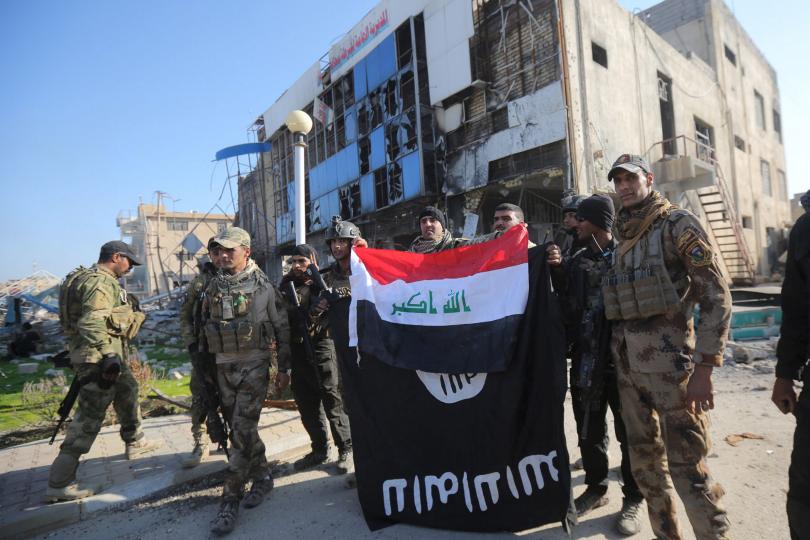
AhlulBayt News Agency - Mostly due to ongoing efforts of the Syrian Arab Army (SAA), Iraqi Army and Kurdish militias, the so-called Islamic State caliphate has shrunk significantly since its peak in 2014.
With cities such as Palmyra, Ramadi and Sinjar lost among many others, ISIS now controls 20% less territory in Syria and 40% less territory in Iraq.
Nevertheless, the jihadist group has now expanded control to Libya and Afghanistan while making sporadic appearances in Yemen, Egypt, Nigeria, Somalia and most recently in some far eastern Asian countries.
Remarkably, the Russian Air Force has conducted an average 60 airstrikes in Syria while the US-led coalition has carried out merely 7 airstrikes on average according to officials of both countries.
These two air campaigns have not only caused thousands of ISIS fighters to be killed, but also significantly cramped ISIS maneuverability and plummeted its oil exports.
Currently, ISIS has been reduced to control merely 3 provincial capitals in Iraq and Syria; namely Mosul, Raqqa and Deir Ezzor.
Nevertheless, Deir Ezzor still boasts a strong SAA presence while major efforts areunderway to break the ISIS-imposed siege of the city.
Both Kurdish factions and the SAA have announced they intend to capture Raqqa while the Iraqi Army has a stated mission of capturing Mosul before the end of the year.
Another reason for ISIS territory shrinking seems to be the group’s all-out-war strategy which astonishingly has put their fighters up against every single armed faction on the battlefields of Iraq and Syria.
/129